Inside Fort Barwara: A 700-year-old warrior fort transformed into India’s first Six Senses Spa Resort
Restoration, royalty, and responsible luxury—how a medieval Rajput fort near Ranthambore became a global heritage hospitality destination.
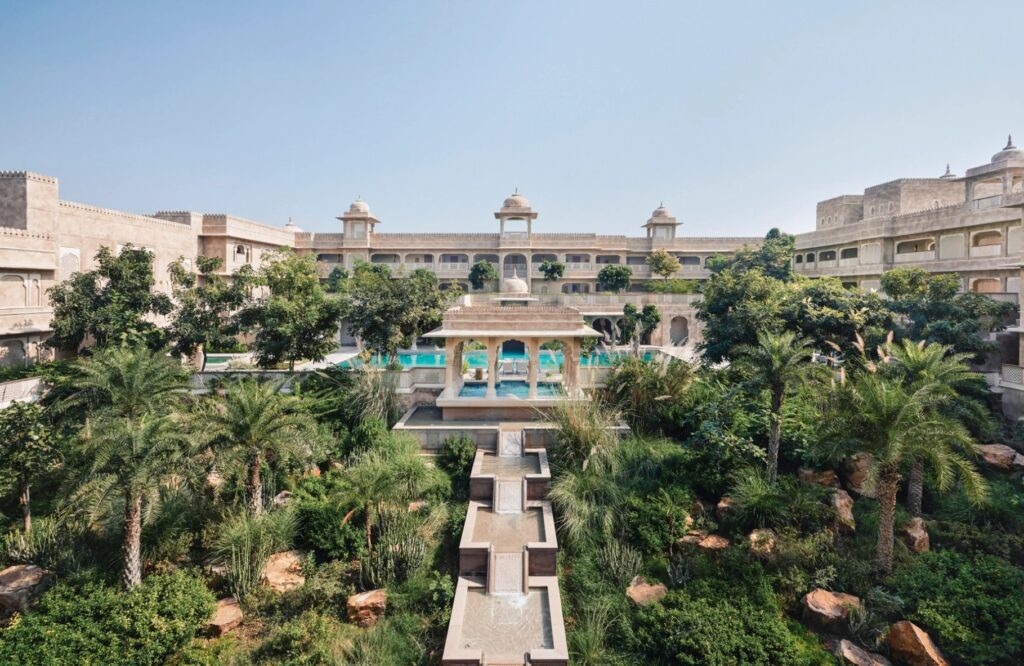
In early spring days, when the sun peaks out of the Aravalli Mountain in the village of Chauth Ka Barwara, it fits right into the window frame of the five-feet-thick and 20-feet-tall wall of the 700-year-old Fort Barwara. The semi-circle of the rising sun splashes shades of orange, yellow and red onto the clear, cloudless sky, overlooking the gentle slopes of the mountain and the periphery wall of the heritage structure in Sawai Madhopur, near the Ranthambore forest and 169 kilometres away from Jaipur.
The fort was constructed in 1417 by Maharaja Bheem Singh Chauhan as part of the kingdom of Ranthambore, which was later passed onto the ruling families of Hadas, Rathores and Rajawats. The fort spread across the area of 5.5 acres has served as an outpost and a watch point for the famous Chauth Mata temple over the years.
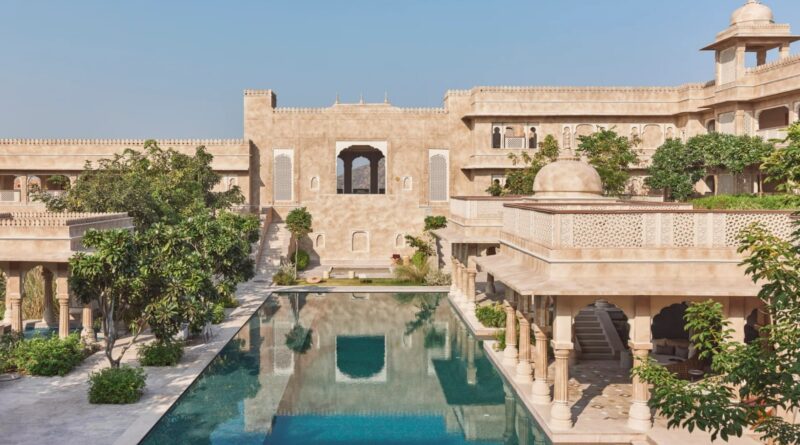
Today, it is India’s first Six Senses spa resort with 48 suites, a 30,000-square-foot spa, two swimming pools, two restaurants, a sustainability lab and an underground hall, where actors Katrina Kaif and Vicky Kaushal got married.
In 2011, Prithviraj Singh from the family of the current owners of the fort roped in Parul Zaveri and her late husband Nimish Patel of Panika, a conservation architectural practice, to restore the fort to its former glory and convert it into a luxury hotel. “When I first saw the site, it was scary,” says Zaveri. The fort was used as a war post that had horse stables and arm and ammunitions. It’s seen a lot of changes and wear and tear even when it was occupied. It fell into disuse after 1947, letting nature take over. Hundreds of bats had made the fort its home. There were outshoots of plants and trees everywhere, deepening the cracks in the buildings and parts of the fort’s wall were falling apart, so were some domes.
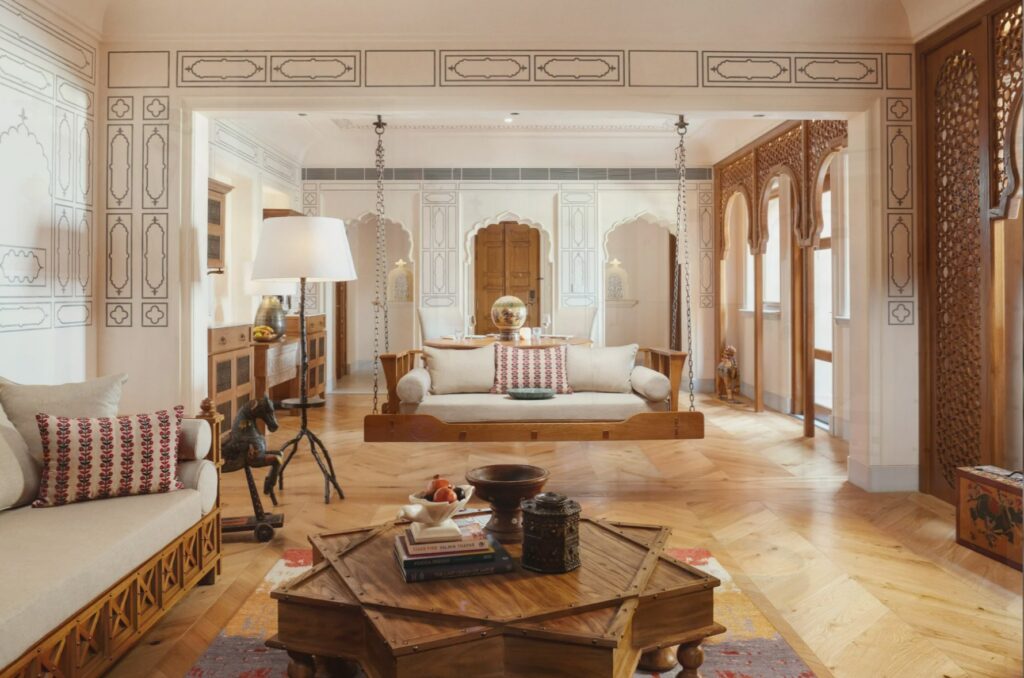
Panika had to first study the layout of the fort, its built style, and the materials used and assess the damage done over the years. The architects learnt that the buildings within the fort complex were built in different styles, subsequently over the years, depending on each ruler’s aesthetic, budget, purpose and available funds and technology. For instance, the Mardana Mahal (men’s palace) which today is Six Senses’ reception and lounge bar was rather plain as compared to the Zanana Maha (women’s palace), which was covered in relief motifs and Shekawati frescoes. Interestingly, the women’s palace also has some elements of Mughal architecture style such as the jail (an intricately carved window).
Then there were the two temples, Khabuja Mahal (for its dome looks like musk melon), the stables and the main gate of the wall. A few structures also had to be added to make room for the suites, swimming pools and restaurants, which was also designed in congruence of the original aesthetic of the fort. The focus of the architectural design was to reinterpret the gracious and regal ambience experienced at Rajasthan’s royal forts and palaces,” says Zaveri. The wide colonnaded corridors with traditional flooring – chevron/leheriya pattern, using a combination of white marble, Dholpur Beige and Kandla red stones and beautiful parapets were added to the heritage structure. “The guiding design principle was to adapt,” adds Zaveri. In essence, restore and utilize all the existing structures of the war fort without tearing them down to make a luxury hotel.
The banquet hall is a perfect example of adaptive reuse. The architects suspected that the high plinth the Mardana Mahal was placed would be hollow. They opened it and their hunch backed by years of conservation experience was right. There was a big space underneath, which was, perhaps, used as a hiding place. The architects converted it into a beautiful banquet hall for 200 people. The five-feet thick walls of the Mardana Mahal were retained and the space within was beautifully treated by the interior designer, including the central passage that led to another courtyard where all day dining opened up with a view of the two watch towers. Cosy, sunken seats were placed in the courtyard, which could either serve as place to relax or to have drinks and starters before the guests went for their meals.
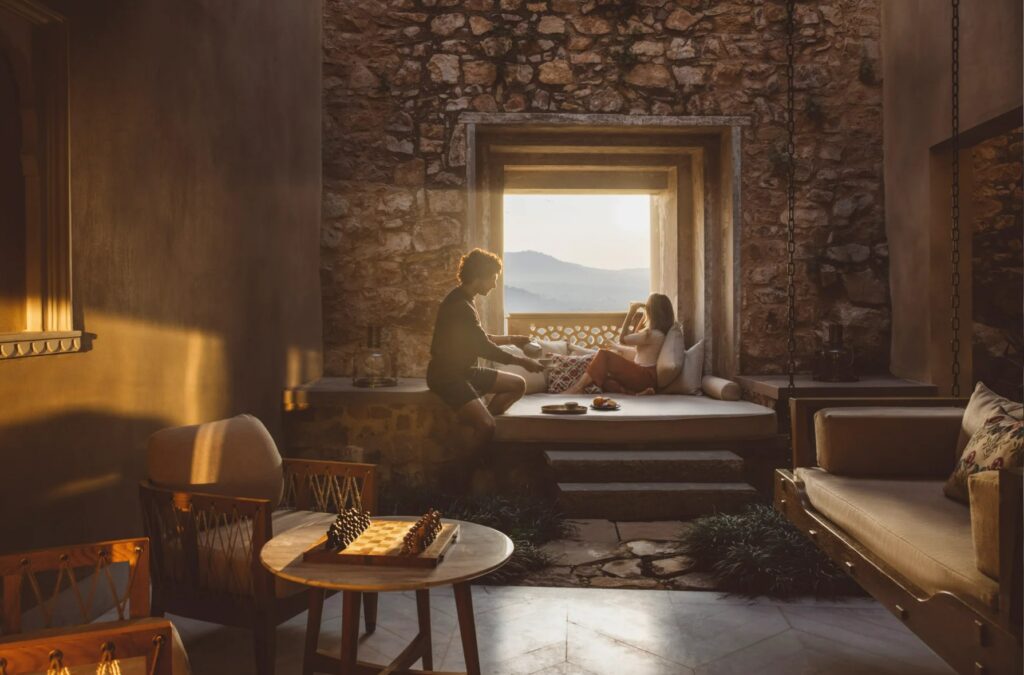
The sanctum sanatoriums of the two temples were retained as well. The temple near Mardana Mahal is the reception area of the spa. The Kharbuja Mahal, which houses the owners’ quarters had a part of its dome broken. Instead or breaking down the entire dome, the architects rebuilt the broken part and repaired the existing parts to make it look like how it would have been hundreds of years ago. The Zenana Mahal along with the ancillary, incomplete structure of the British era in the fort complex now houses the spa, which has the old courtyard.
Panika restored these structures, including the fort’s walls. They strengthened the foundations, fix the cracks in the walls and decode the type of finishes used on each. The brief was clear, restore as much as possible, and redesign only in the context of the old structures, using local materials, local artisans and even labour. The complex houses another building called the Kharbuja Mahal (muskmelon palace) for its dome looks like an oversized muskmelon. Half of it was broken, but the architects, instead of breaking the entire structure down, fortified the existing parts and rebuilt the broken bits in the same style as the original.