Inside the Jazz Museum in New Orleans, the city where jazz was born
Get an in-depth lesson in Jazz, a music style created by slaves of colour, at this must-see museum
In New Orleans, the city where jazz was born, saxophone, trumpets and drums are everywhere. You will find musicians performing jazz sets on streets, inside cafes, bars, restaurants and auditoriums. People from around the US and world visit the Big Easy, a moniker New Orleans has earned for its easy life, to listen to some of the best jazz gigs that there are.
This quintessential American style of music was born in New Orleans in the 19th century by enslaved Africans, working in sugar and cotton plantations of the city, shaped as a crescent around the Mississippi River.
Over the years, New Orleans has raised many legendary Jazz musicians. Louis Armstrong, Buddy Bolden, Mahalia Jackson, Louis Prima and others. “They are memorialised in The New Orleans Jazz Museum, housed inside the historic New Orleans branch of the U.S. Mint,” says Greg Lambousy, director of the museum. It has permanent and temporary exhibits that deep dive into the history and culture of jazz. That makes it a great first stop in the city, as it gives visitors an introduction to Big Easy’s culture, as almost everything here revolves around jazz.
The New Orleans Jazz Museum spans across 75,000 square feet of interior space, complemented by an additional 75,000 square feet of fenced grounds. The latter is a popular venue for free and ticketed festivals and concerts.
New Orleans has raised many legendary Jazz musicians. Louis Armstrong, Buddy Bolden, Mahalia Jackson, Louis Prima and others. “They are memorialised in The New Orleans Jazz Museum, housed inside the historic New Orleans branch of the U.S. Mint,” says Greg Lambousy, director of the museum.
The museum’s collection is the largest and most comprehensive of its kind in the world, with over 30,000 artifacts that highlight the rich history of New Orleans jazz and its broader musical heritage, spanning genres such as R&B, hip-hop, and bounce—all of which have deep roots in the city’s culture. The artefacts on display are musical instruments, films, photographs, paintings, recordings, performance costumes, building fragments, sheet music, and ephemera.
One of its most popular exhibits is ‘It All Started in Jane Alley: Louis Armstrong in New Orleans’. It explores the life and legacy of jazz trumpeter, bandleader, and singer, widely regarded as one of the most influential figures in jazz history. The museum has Armstrong’s cornet, which he played while at the Municipal Waif’s Home for Boys. He had fired a pistol in the air on New Year’s Eve of 1912 and was sent to the correction home as a punishment. From January 1913 to June 1914, Armstrong learned the cornet and bugle under instructor Peter Davis. This cornet at the museum has notches cut into its mouthpiece, made by a young Armstrong to aid his embouchure. “It is a notable piece associated with one of the most iconic jazz musicians in history. It’s highlighted due to Armstrong’s central role in the development and popularisation of jazz,” adds Lambousy.
There are also personal manuscripts and audio recordings, giving insights into his musical development and personal life. Also, interesting fact: Armstrong (August 4, 1901 to July 6, 1971) visited Mumbai in December 1964 and performed at Rang Bhavan and Shanmukhananda Hall to a packed audience.
Another special artifact at the museum is a Bass from Congo Square. It represents the homemade instruments that played an important role in early New Orleans jazz, highlighting the resourcefulness and creativity of the community. Then there is Baby Dodds’ tapes with 24 hours of interviews and demonstrations. Dodds (December 24, 1898 to February 14, 1959) was an influential jazz drummer, and the digitized interviews capture his invaluable insights on early jazz and the music style’s history.
Famous American blues guitarist and singer Buddy Guy has his polka-dot guitar and a vibrant jumpsuit on display here. The polka dot plays tribute to his late mother and has become an emblem associated with his brand. Both the artifacts reflect the musician’s flamboyant stage presence. “These are unique pieces representing Buddy Guy’s influence in the genre of blues and jazz,” says Lambousy.
A very special display is of folk and blues singer Lead Belly’s original lyrics from his signature ‘Midnight Special’. It is a traditional folk song that has become one of his signature pieces. It is said to have originated among prisoners in the American South and refers to the Midnight Special, a passenger train, which symbolizes hope and freedom for those behind bars. Lead Belly’s (January 21, 1888 – December 6, 1949) work is often considered an essential link in the development of American folk and blues, genres that intersected with early jazz, says Lambousy.
The tour of the museum begins with Face Value: The Illusions and Power of Money. The exhibition by Generic Art Solutions, an art collaborative by artists Matt Vis and Tony Campbell, is housed in the historic engine room where the New Orleans Mint’s steam engine operated from 1839 to 1909. The artists are playing on the concept of money and music. Its key highlights include The Money Jukebox: A fully functional jukebox loaded with 7-inch records featuring money-themed songs across local genres like jazz, blues, hip-hop, and zydeco. Then there is Louisiana Landfall, which is an interactive coin-pusher arcade game that addresses Louisiana’s ecological challenges, including coastal erosion, through art. From a Slumdog to the King of Romani Music celebrates Šaban Bajramović (April 16, 1936 – June 8, 2008), a trailblazing Serbian Roma musician who fused jazz, blues, and flamenco into his unique sound. It showcases his iconic white suit and glasses, recordings, and posters chronicling his rise from adversity to international acclaim.
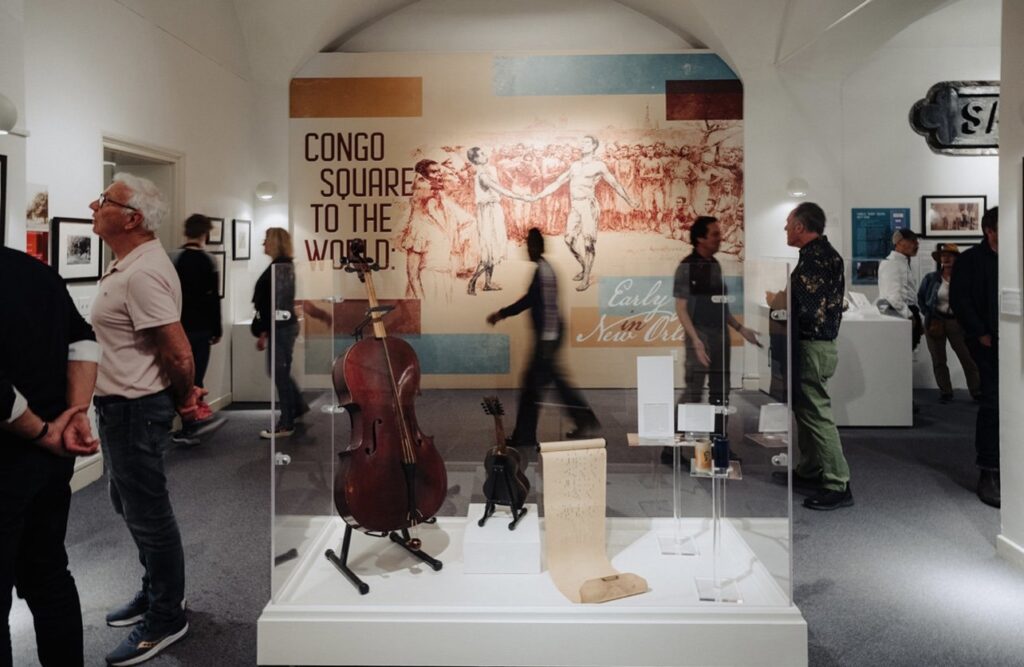
On the next floor, there is Drumsville: Evolution of the New Orleans Beat. This exhibit traces the legacy of New Orleans’ drumming traditions, from Congo Square’s African percussion roots to the development of the modern drum kit in the city. It features New Orleans drummers like Baby Dodds, Earl Palmer, and Zigaboo Modeliste, with a collection of historic drum kits, tambourines and percussion equipment. Congo Square to the World: Early Jazz in New Orleans talks about how and why New Orleans jazz became popular worldwide. It also highlights the important factors that led to the birth of jazz, from Congo Square, where enslaved and free people of colour gathered to drum and dance, to the bustling port city of New Orleans with its diverse cultural influences. It explores the musical traditions that fed into early jazz and highlights the lives and music of pioneers like Charles or Buddy Bolden, Freddie Keppard, Jelly Roll Morton, Edward or Kid Ory, and Joe or King Oliver.
The exhibit begins with Roots of Jazz, illustrating how the city’s social and musical culture fostered the development of jazz. It moves through New Orleans’ historic districts known for music, such as Storyville and Black Storyville, where jazz musicians refined their craft in the early 20th century. It also explores the migration of musicians such as Louis Armstrong to northern and western cities as they carried the sound of New Orleans jazz across the country.
Shake Your Hips: Louisiana Blues remembers the rich blues tradition of the state. This exhibit tells the complex story of this influential genre within the larger context of American music.
Louisiana Blues has been shaped by the state’s diverse geography, history, and regional cultures. The blues from New Orleans blend with the city’s jazz legacy, while southwest Louisiana’s blues incorporate elements of zydeco and Cajun music.
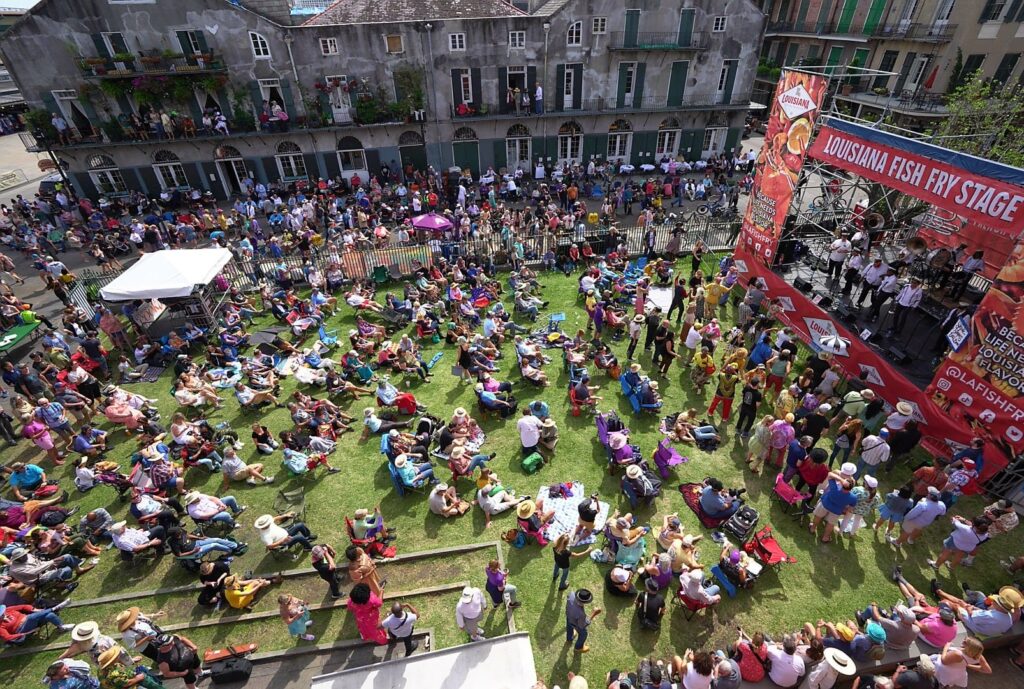
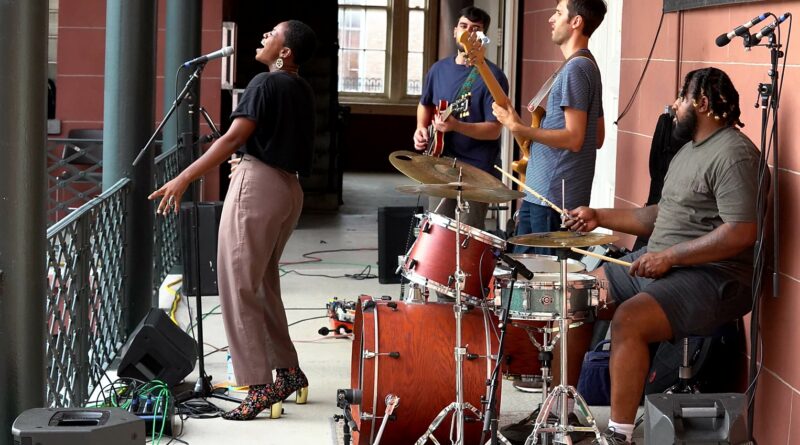
Apart from these, the museum holds jazz training and scholarship programmes for musicians around the world. It also has free, balcony performances. The musicians jam from the building’s balcony for listeners gathered on its grounds, neighbouring buildings and on the streets. What started during Covid-19 lockdowns has now become a continuing tradition.
The museum had its beginnings in 1961. It was the brainchild of members of the New Orleans Jazz Club, which was founded in 1948 on Mardi Gras Day, by a group of local jazz musicians. By 1961, it became the first private museum located in the French Quarter.
The museum’s building, formerly the New Orleans branch of the U.S. Mint, was designed by William Strickland, a renowned architect of the time and a favorite of the early U.S. federal government. The red-brick building is a striking example of Greek Revival architecture with its portico, supported by four monumental Ionic columns, symmetrical layout with a central core that’s flanked by wings that create a balanced and orderly appearance. There are granite pilasters and a grand staircase inside.
In 1792, during the Spanish colonial period, the heritage structure housed Fort St. Charles, a defence building, later utilised by General Andrew Jackson during the War of 1812. The fort was demolished in 1821, and the grounds were briefly transformed into the first version of Jackson Square, a popular tourist attraction in the city, before the construction of the U.S. Mint began in 1835.
The New Orleans Mint served multiple roles over the years. From 1838 to the early 1910s, it operated as a mint, producing both U.S. and Confederate silver coins. In 1966, the government donated the building to the Louisiana State Museum, but it remained largely unused until it was repurposed as the New Orleans Jazz Museum.
Timing
Tuesday to Sunday: 9:00 AM to 4:00 PM. Closed on Monday
Entry fee: $8
For more information about the museum and the city’s jazz culture, check out visitneworleans.com.